When Should You Start the Recruiting Process for Track and Field?
November 12, 2026 · 5 min read
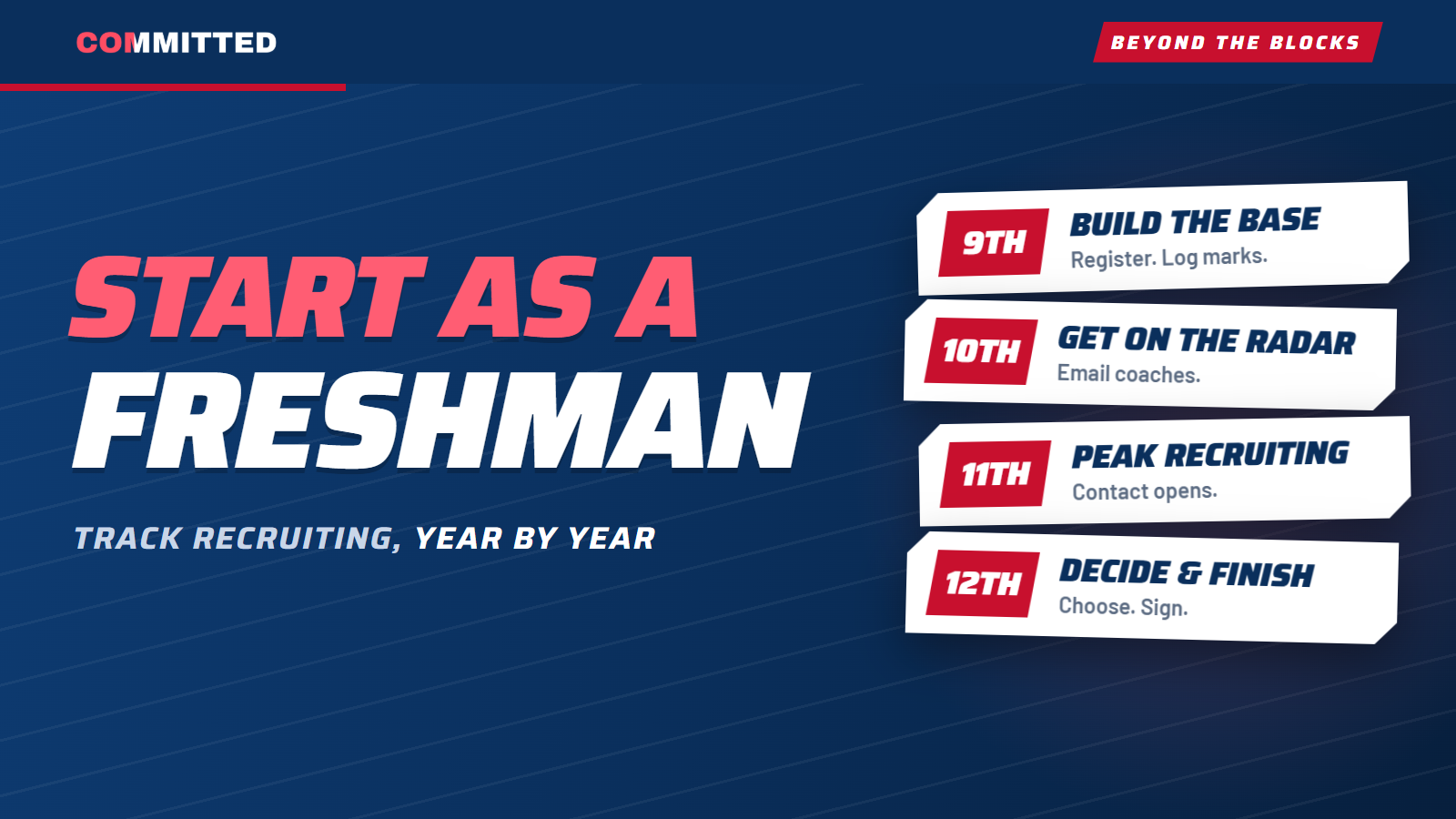
The short answer is start as a freshman.
That does not mean emailing fifty coaches in September of ninth grade, and it does not mean picking a college. Division I and II coaches are not even allowed to call you yet. Starting early means building the three things that take years: a track record, your grades, and a first connection with the programs you like. Do that from the start, and recruiting stops being a scramble in junior year and becomes a plan.
Why Earlier Is Better
Your marks need time to tell a story. One fast race can get a coach's attention. Three or four seasons of steady improvement is what convinces one. Starting as a freshman gives you a baseline, and every personal best after it shows which way you are heading. Log each mark with its results link so a coach can check it in seconds.
Your grades count from day one. To compete at a Division I school you need 16 NCAA-approved core courses, finished in four consecutive years starting in ninth grade, and at least a 2.3 core-course GPA. Division II asks for a 2.2. A rough freshman year is hard to fix later.
Coaches cannot start the conversation yet, but you can. Division I and II coaches generally cannot call, text, or DM you until June 15 after your sophomore year. You can reach out to them at any time. An athlete who introduced themselves in ninth or tenth grade is not a stranger when that date arrives.
Recruiting starts sooner than most families think. The NCAA says it can begin as early as ninth grade, though in most cases it starts in 11th grade, the summer after sophomore year. The athletes a coach already knows about have a head start.
You get time to improve. If you learn what the programs you like look for in your event while you still have two or three seasons to train, you have time to close the gap.
Freshman Year: Build the Base
Register with the NCAA Eligibility Center. The NCAA says to register before ninth grade at eligibilitycenter.org, and the Profile Page account is the one it points early students to.
Meet your counselor. Ask for your school's list of NCAA-approved core courses, take from it, and earn the best grades you can.
Race and log every mark. Add each result with its link to your profile. A mark with a results link shows as Verified on Committed.
Make a short list. Write down 10 to 15 schools you would be proud to attend, across Division I, II, III, NAIA, and junior college.
Optional: send a short note to a few coaches with your event, graduation year, best marks, and results link. They may not write back, and that is normal. The NCAA says Division I coaches may not be permitted to reply at this stage.
Sophomore Year: Get on the Radar
Keep improving, and keep logging. Two seasons of marks is a trend, and coaches look for trends.
Start emailing coaches. Include your name, event, graduation year, NCAA ID, and best marks with links, and fill out the questionnaire on a program's recruiting page. Division I coaches can send you questionnaires and camp information at any time.
Take unofficial visits when your family is traveling anyway. Unofficial visits, which you pay for yourself, are allowed at any time, though a coach may not be free to meet you.
Move your NCAA account forward. The NCAA's timeline for tenth grade is "plan." If a Division I or II school is recruiting you, your Profile Page needs to become an Academic and Athletics Certification account.
Get ready for June 15. After your sophomore year, Division I and II coaches can start reaching out directly. Have your profile current, your marks verified, your parents on board, and a list of questions ready.
Junior Year: The Main Event
Coaches can contact you directly. Division I and II coaches can now call, text, and message you. Division III, NAIA, and junior college coaches can talk to you at any time.
Official visits open. An official visit is a campus trip the school pays for. NCAA guidance puts the Division I start for sports other than football and basketball, which includes track and field, at August 1 of junior year. Division II visits open after June 15 before junior year. For a Division I official visit you need a Certification account, and a school can generally give you only one.
Ask the right questions. Where would I fit in the event group? Is there scholarship money, and how much? What marks would I need to score at conference? What are the academics like?
Narrow your list. Look up the admission requirements for each school, including whether it wants test scores, and cut your list to the five to eight that fit your marks, grades, and goals.
Keep your proof fresh. Add each new result with its link, and keep indoor and outdoor marks in their own seasons.
Senior Year: Decide and Finish
Compare your options and choose. A verbal offer is not a signed agreement. In Division I and II, nothing is official until you sign an athletics aid agreement, and you can sign with only one school. Division III schools do not give athletics scholarships, though they can offer academic and need-based aid.
Apply for admission. NCAA certification is not the same as being accepted, so you also have to apply to the school and be admitted.
Finish strong in class. Complete your last core courses, have your counselor send your final transcript, and request your final athletics certification starting April 1 if you enroll in the fall.
Keep racing. Your senior marks still count, and coaches keep watching until you sign.
Already Past Freshman Year?
It is not too late. Start today with the steps for your grade. Division III, NAIA, and junior college coaches can talk to you at any time, and athletes do find the right program late. You just have less time to build a record and fewer seasons to improve, so move quickly: register with the NCAA Eligibility Center, get your marks and links in one place, and start emailing coaches.
Rules differ by division and sport, and they change. This post is general information, not compliance advice. If you are unsure, check the current NCAA recruiting calendar or ask a school's compliance office.
Starting early is easier when your marks live in one place. Create your Committed profile, add each result with its link, and start the conversation with coaches. Parents, you can create a parent account to help. Want the rules for each division in plain language? See the Rules Hub. Not sure what to say in that first email? Read How to Wow College Coaches.
Sources
NCAA Division I Recruiting Guide, sports other than football and basketball (NCAA, effective August 1, 2022)
Rules Hub (Committed, last verified July 18, 2026)